
Charge reversal: what are we talking about?
In our modern societies, there's a strange habit: asking those who suffer injustice to prove it. As if, to be heard, one must first convince others that one deserves to be heard. This habit has a name: the reversal of the burden of proof. It shapes the way we perceive minorities, beliefs, bodies, and identities.
In a just system, the one contesting a right should justify why they want to restrict it. But in our current society, it's often the opposite: the one exercising that right must constantly justify themselves. They must explain, reassure, prove, and start all over again. In the end, it's no longer a dialogue, it's an interrogation. For example: you want to forbid a woman from wearing a certain garment → it's up to you to explain why you're depriving this woman of a right, not up to her to explain why she wants to wear it!
How did this reversal come about?
On television, for example, “debates” about the veil, faith, or difference never begin with a legal principle, but with doubt. The question isn't: “ Why do institutions forbid the veil?” ; the question is: “ Why do you wear the veil?” and this simple role reversal changes everything. It immediately places the victim in the position of the accused, as if her freedom had to be justified.
And on social media, outrage reigns supreme. Those who are subjected to this must be exemplary, pedagogical, patient: always calm, always gentle, or risk being accused of aggression. Eventually, many grow weary and fall silent, tired of repeating themselves endlessly, of offering explanations when they are unnecessary. This becomes dangerous: silence is immediately interpreted as a lack of voice.
This reversal comes at an immense cost.
When you spend all your time defending yourself, you end up existing only through the eyes of others. When you always have to "explain," you exhaust yourself trying to translate what, for you, is simply natural.
This creates a profound weariness, a kind of collective exhaustion. We censor ourselves, we avoid certain spaces, certain conversations, certain places. In the long run, we end up believing that our voices no longer have a place. And that's how a society slowly slides toward imbalance: when only the loudest speak, and the others withdraw to preserve their peace.
Muslim women are at the heart of this mechanism
Among all the categories of people affected by this phenomenon, veiled Muslim women in France are probably the most striking example.
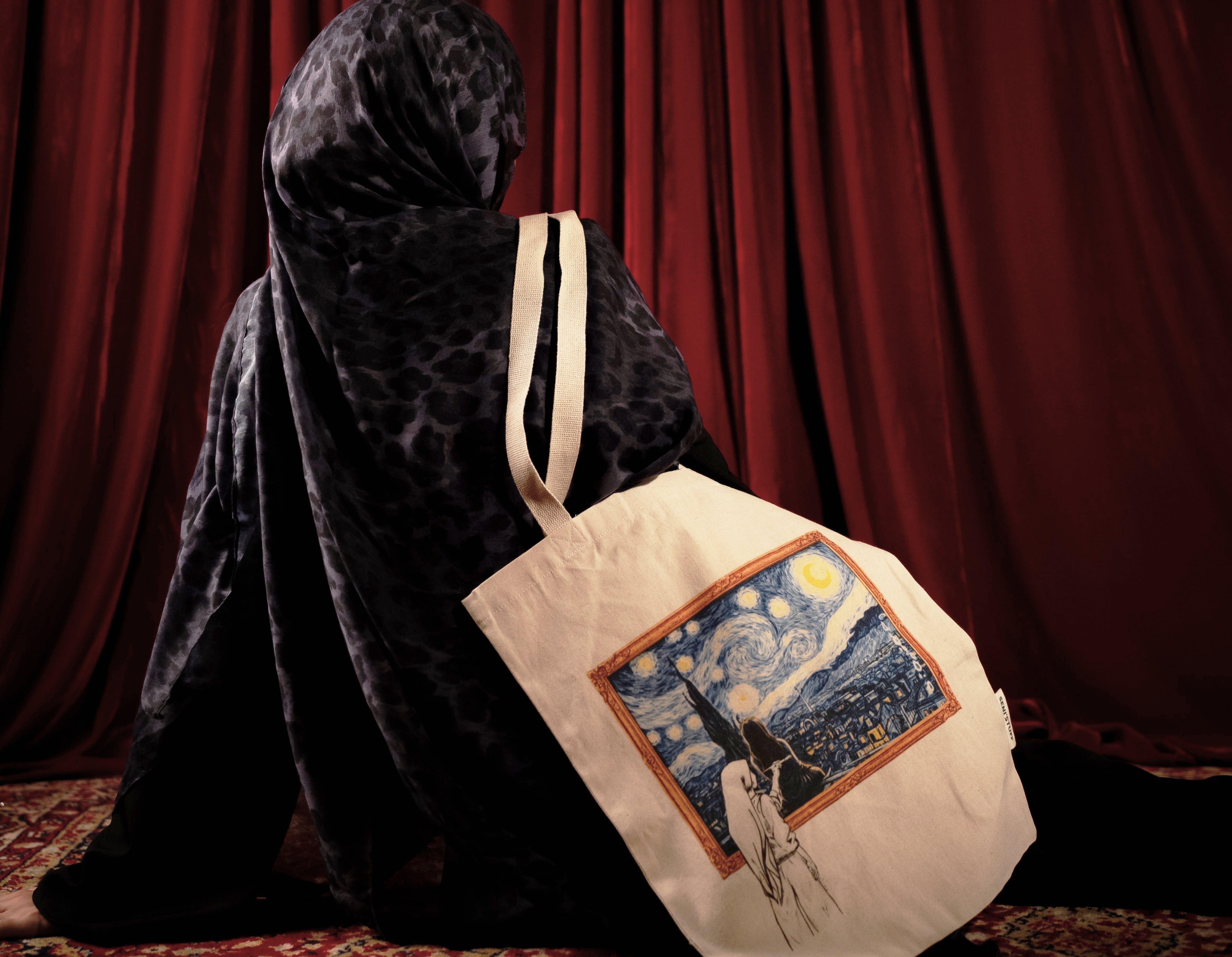
They are rarely invited to talk about their profession, their art or their ideas: they are summoned to talk about the veil . As if their entire life were reduced to the veil, as if their individuality had to constantly be explained through it.
They must prove that they chose freely, prove that they are not subservient, prove that they "represent" their religion well. And if they refuse to play this game, their silence becomes suspect. It's a vicious cycle: speaking confirms the suspicion; remaining silent validates it.
The reversal of the charge is not an abstract theory: it is a lived reality, every time you are asked to explain who you are.
But the answer lies neither in anger nor in silence: it lies in consistency. Speak when necessary, remain silent when it is useless, create when it is needed. Reject chaos, but also reject fear.
because between the two, there is a precious space: that of dignity.